
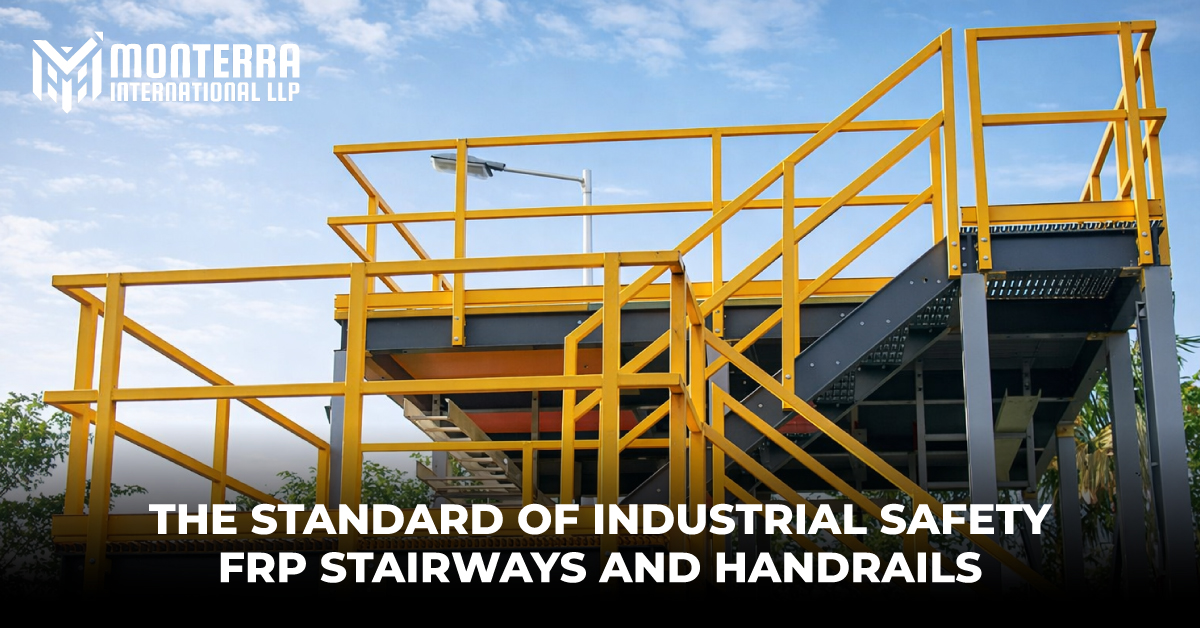
In the high-stakes world of industrial design, safety is often treated as a checklist of compliance standards. But for those who actually walk the gantries of a chemical plant, navigate the slick stairs of a wastewater treatment facility, or maintain offshore rigs, safety isn't a line item—it’s a physical reality.
For decades, metal was the undisputed king of these environments. It was strong, familiar, and available. But metal has a fatal flaw: it is fundamentally at odds with the elements. It rusts, it corrodes, it conducts heat and electricity, and eventually, it fails.
Enter Fiberglass Reinforced Plastic (FRP). Once a niche material, FRP has moved to the forefront of industrial architecture. If you are looking to upgrade your facility, understanding the safety benefits of FRP stairways and handrails isn’t just about making a smart purchase; it’s about engineering a zero-harm environment.
FRP is a composite material—typically a matrix of resin reinforced with glass fibers. This combination creates a material that possesses the strength of metal without its biological or chemical vulnerabilities.
When evaluating stairways and handrails, safety rests on three pillars:
FRP excels in all three.
Slips, trips, and falls account for the majority of workplace injuries. In industrial settings, the risk is amplified by oils, moisture, and chemicals.
Metal stairs rely on raised patterns for traction. Over time, these wear down under foot traffic and become dangerous when wet. Anti-slip coatings eventually peel, creating uneven surfaces.
FRP stair treads are manufactured with integrated grit surfaces embedded directly into the resin.
Corrosion is often invisible until failure occurs. FRP is inert and resistant to rust, acids, alkalis, and solvents.
A handrail that doesn’t corrode retains its load-bearing capacity for decades.
Metal conducts electricity. FRP does not.
FRP’s low thermal conductivity prevents burns and cold injuries.
FRP provides controlled flexibility, reducing fatigue and absorbing impacts.
FRP is approximately 75% lighter than steel, improving installation safety.
| Feature | Metal / Galvanized | FRP |
|---|---|---|
| Initial Cost | Lower | Moderate |
| Maintenance | High | Low |
| Corrosion | High Risk | Non-Corrosive |
| Weight | Heavy | Lightweight |
| Conductivity | Conductive | Non-Conductive |
| Life Span | 5–10 Years | 20+ Years |
Safety is about protecting people, not just meeting codes. FRP eliminates corrosion, slipping hazards, electrical risks, and maintenance downtime.
Monterra International LLP, a leading FRP components manufacturer, engineers stairway and handrail systems built for longevity and zero-harm environments. Choosing Monterra means investing in reliability, safety, and long-term performance.
