
Industries across the globe are quietly undergoing a material revolution. Steel, wood, and concrete—once considered the backbone of industrial construction—are increasingly being challenged by a smarter, stronger, and more durable alternative: FRP (Fiber Reinforced Plastic).
From chemical plants and power stations to infrastructure projects and manufacturing facilities, FRP products for industries are redefining how industrial spaces are built, protected, and maintained. The reason is simple—industries today demand materials that are lightweight yet strong, corrosion-resistant, low-maintenance, and cost-effective over the long term. FRP checks all those boxes and more.
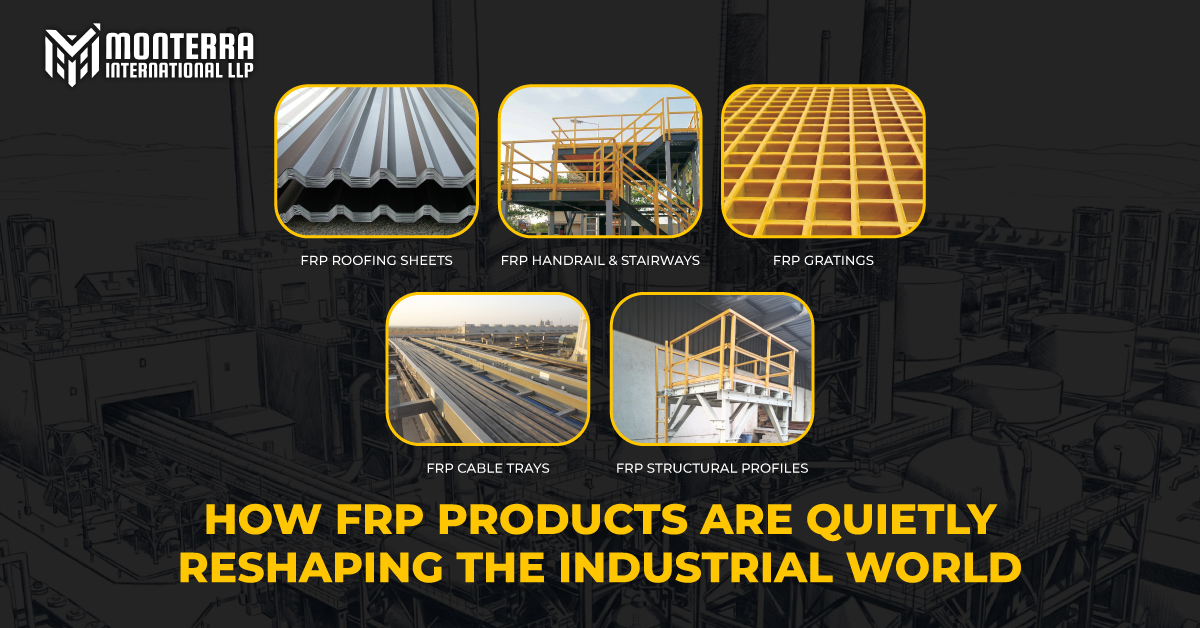
Let’s explore how different FRP products—such as FRP structural profiles, FRP cable trays, FRP gratings, FRP handrail & stairways, and FRP roofing sheets—are shaping modern industrial applications.
Before diving into specific products, it’s important to understand why FRP has gained so much momentum in industrial environments. Unlike traditional materials, FRP is engineered for performance. It combines high-strength fibers with polymer resins, resulting in a composite material that offers:
Because of these characteristics, FRP is particularly well suited for challenging industrial environments where heavy loads, heat, moisture, and chemicals are frequent problems.
FRP structural profiles are the foundation of many industrial structures today. These profiles—available as beams, channels, angles, tubes, and custom shapes—are widely used to build platforms, walkways, frames, ladders, and support structures.
Traditional steel structures are strong but vulnerable to rust, corrosion, and frequent maintenance. FRP structural profiles eliminate these issues while offering comparable strength.
Cable management is a critical aspect of industrial safety and efficiency. Traditional metal cable trays may corrode, conduct electricity, or require frequent replacement. This is where FRP cable trays make a significant difference.
When it comes to flooring solutions in industrial environments, FRP gratings have become the gold standard. They are commonly used in walkways, platforms, drainage covers, and mezzanine floors.
The use of FRP handrails and stairways is essential for safeguarding employees while ensuring the stability of structures.
Roofs in industrial settings face challenges such as high temperatures, rainfall, chemicals, and pollution. FRP roofing sheets are crafted to meet these demands effectively.
In addition to their functional capabilities, FRP products resonate with contemporary sustainability objectives. Their extended lifespan minimizes material waste, and low maintenance needs reduce environmental impact.
While the upfront investment might be slightly above traditional materials, the overall lifecycle expense is considerably lower due to fewer operational halts and zero maintenance costs.
As sectors progress, the necessity for materials that integrate strength, security, and sustainability will rise. FRP products are evolving from specialized options into established industry standards.
FRP is more than just an alternative—it represents a wise investment for industries that prioritize durability, safety, and long-lasting performance. Covering everything from structural elements to roofing solutions, FRP products are revolutionizing the construction and upkeep of industrial environments.
By opting for FRP solutions, industries address current issues while also setting up their operations for future resilience.