
In the world of industrial design, we often talk about "the backbone" of a facility. Usually, people are referring to the machinery or the digital infrastructure. But if you’ve ever spent a twelve-hour shift on a factory floor or navigated an offshore oil rig in a storm, you know that the literal backbone of a safe operation is what’s right under your feet.
For decades, steel and aluminum were the undisputed kings of industrial flooring. They were strong, they were traditional, and—frankly—they were the only real options. But as industries have evolved, so have our materials. Enter FRP Molded Grating: a high performance, lightweight, and incredibly durable alternative that is quietly revolutionizing how we build industrial spaces.
To understand why this material is a game-changer, we have to look at its DNA. FRP stands for Fiber Reinforced Polymer.
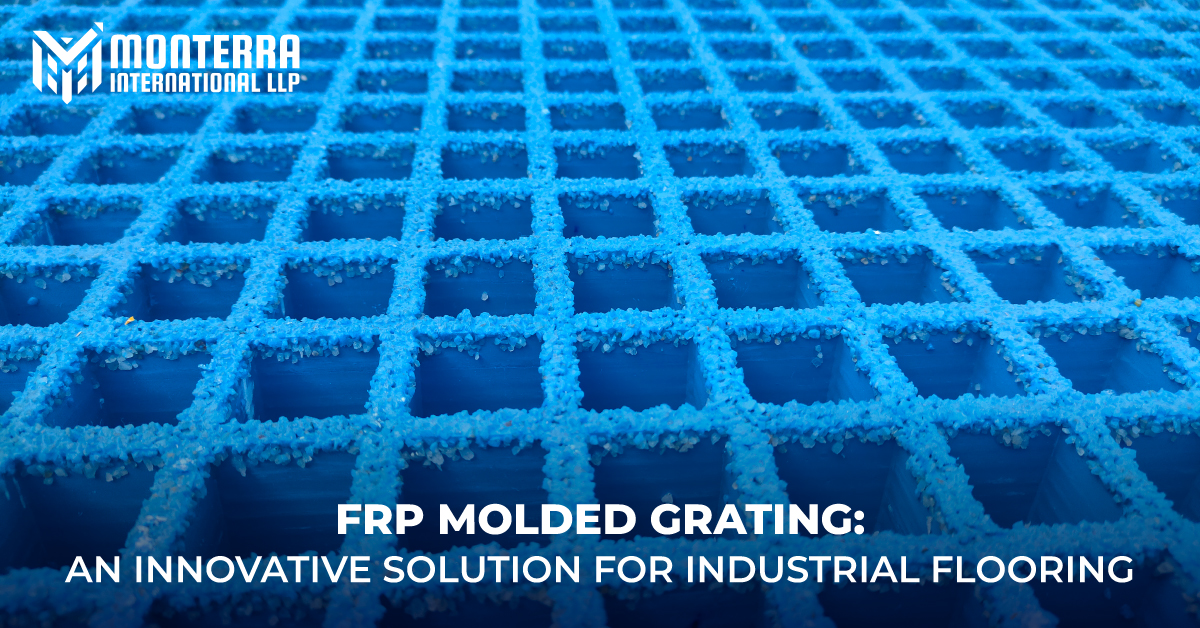
Unlike pultruded grating, which is assembled from linear shapes, FRP Molded Grating is manufactured by laying continuous glass fibers in a mold in a vertical and horizontal direction, then thoroughly wetting them with resin. Once the resin cures, you’re left with a one-piece, monolithic mesh structure.
This "interwoven" construction gives the grating bidirectional strength. In simpler terms: it doesn’t matter which way you turn it; it’s built to handle the load.
If steel has worked for a century, why change now? The answer lies in the hidden costs of traditional materials—maintenance, replacement, and safety incidents. Here is why FRP is winning the "floor war."
In environments like chemical plants, wastewater treatment facilities, or coastal refineries, metal is essentially on a countdown clock. Rust and corrosion don't just look bad; they compromise structural integrity.
FRP Molded Grating is naturally resistant to a massive spectrum of acids, alkalis, and solvents. It doesn’t rust, it doesn’t peel, and it doesn’t require a fresh coat of expensive specialized paint every two years.
>One of the biggest "aha!" moments for engineers is realizing that FRP can offer comparable strength to steel at about one-fourth of the weight.
Industrial accidents are often the result of slips and falls. FRP Molded Grating typically comes with a "gritted" surface—usually a dynamic combination of quartz or angular silica. This provides an incredibly high friction coefficient that remains effective even when covered in oil, grease, or water.
Furthermore, FRP is non-conductive. In electrical substations or high-voltage areas, having a floor that won't turn into a live wire during a fault is a literal lifesaver.
| Feature | FRP Molded Grating | Steel Grating |
|---|---|---|
| Corrosion Resistance | Excellent | Poor (Requires Galvanizing) |
| Weight | Lightweight (~25% of steel) | Heavy |
| Conductivity | Non-Conductive | Highly Conductive |
| Maintenance | Near Zero | High (Painting/Replacing) |
| Initial Cost | Moderate | Lower |
| Long Term Value | Extremely High | Moderate to Low |
While you can use FRP Molded Grating almost anywhere, it truly proves its worth in "harsh" environments.
Not all FRP Molded Grating is created equal. The "secret sauce" is in the resin selection. Depending on your needs, you can choose:
The mesh patterns also vary. The standard square mesh (typically 1.5" x 1.5") is the most common, but "micro-mesh" options are available for areas where you want to prevent small tools from falling through or need to make the floor "heel-friendly" for foot traffic.
In 2026, we can't talk about industrial solutions without talking about the planet. While FRP is a polymer-based product, its sustainability comes from its longevity.
Because FRP lasts 20 to 50 years without needing replacement, the "lifecycle carbon footprint" is often lower than steel, which requires energy-intensive mining, smelting, and frequent replacement/refurbishment. Less maintenance means fewer chemicals (paints and solvents) being released into the environment over the decades.
If you're considering integrating FRP into your next project, keep these three tips in mind:
At the end of the day, selecting the proper flooring is more than just comparing spec sheets or looking for the lowest bid; it’s about the people who walk that floor every shift. At Monterra International LLP FRP, we don’t just manufacture molded grating—we build the confidence that your infrastructure can handle whatever the day throws at it.
Whether you’re fighting the never-ending battle of corrosion in a chemical plant or the heavy-duty work environment of an offshore platform, our FRP Molded Grating is a testament to what happens when durability meets good engineering. We’ve moved past the era of "rust and replace." With Monterra International, you’re investing in a solution that’s lighter on your crew, easier on your budget over time, and uncompromising on safety.
